
Exit Strategy
A short story.

Author’s note: This is work of fiction, but dramatizes difficult/sensitive topics. If you or someone you know is experiencing suicidal thoughts or a crisis, please reach out immediately to the Suicide Prevention Lifeline at 800-273-8255 or text HOME to the Crisis Text Line at 741741. Services are free and confidential. For information about Alzheimer’s disease and dementia, visit https://www.alz.org.
“There it is,” yells the pilot (Jack, was it?), banking the noisy, rattletrap float plane down and to the right.
As we nosedive out of a cloud, the object of my dreams appears through the yellowed and scratched Plexiglas passenger window: a subarctic river slithering across the Canadian tundra and off into infinity like a milky green snake.
The ultima Thule. Escape route into the Big Unknown.
I smile at the pilot, give him a thumbs up. Then I look back out the window but this time my eyes land on an object in the foreground: the prow of the home-built birch bark canoe lashed to the pontoon. It has not only been a year-long labor of love (thanks, YouTube) but a labor of purpose. Of course, it doesn’t look much like a coffin, but—if the vision plays out the way I imagine it will—it should serve my purpose quite nicely.
Soon the plane touches down just upstream of a deserted depot and idles up to a dock jutting out into the river. Ten minutes later, my gear is stuffed into the canoe which is now resting on a sandy spit next to the dock. The hypnotic trickle of ice-cold river water rushing between my insulated, waterproof boots is interrupted by the squeaking of the plane’s door.
The pilot (or was it Jim?) is climbing in.
“Thanks for the lift,” I call out, suddenly becoming hyper-aware of the outline of my grandfather’s freshly sharpened pocketknife through the soft, worn denim of my jeans.
He calls back without much of a smile, just a robotic nod. “Anytime. Be safe.”
A minute later, the plane—with Jack or Jim back at the stick—is roaring off into a white hot disc of the Western sun.
***
There has been no official diagnosis. But when you know, you know. Especially when you are genetically predisposed (cursed?).
For me, like so many people, it started with the clichés. Imperceptibly. Innocently.
Trying to remember where I left the car keys (several times a week). Standing at a gas pump in the pouring rain and no matter how many times you blink your eyes or clench your fists or stomp your foot you simply cannot dislodge your debit card PIN number from your shriveling gray matter (twice last week). Walking through a doorway to fetch an object in the other room and then, after passing under the post and lintel, immediately forgetting what you went to fetch (happens all the time). But then, escalation: my back to the class, intent on illustrating the tapeworm cycle on the chalkboard but suddenly forgetting the names of all three stages. And most troubling of all, staring at someone you’re convinced has to be a close family member or friend, but seeing an unfamiliar face for a fleeting, maddening moment (Gina, my wife of 24 years, the latest).
Uncommon, premature behaviors for a 54-year-old high school biology teacher.
And because I’ve watched a father and two other blood relatives succumb to the living nightmare of AD, I prefer to control the details of my own departure—on my own terms, not fate’s—without having to expose Gina to my messy end, i.e., the bed-shitting phase.
***
As I push off from the beach, wetting my paddle with the first stroke, I’m filled with joyful trepidation, but also child-like wonder at what might await me on the other side. Of course, my dyed-in-the-wool evolutionist self believes there will be nothing but nothingness on the other side. But my insecure, egocentric Episcopalian-Buddhist self believes some light or space or time or intelligence and/or everlasting love could exist inside that nothingness.
When I was young, a child—maybe even a toddler—I remember lying in the bottom of my grandfather’s old wood and canvas canoe and staring up into the blue sky streaked with wispy white clouds. Every now and then I would shut my eyes and imagine an invisible force under my back, lifting me up out of the canoe and high into those streaks miles overhead, in a sort of bodiless flight, gently spinning me, feeling the cool breath of the upper troposphere brush my cheek, never looking back at the earth, only at the bright blue which eventually darkened into an endless cobalt panorama pricked with twinkling orange stars and lime-green galaxies pulsing like bioluminescent plankton in a ship’s wake at night.
It felt like eternity. If I could see that forever after my atoms are redistributed back into the carbon cycle, I’d be a happy man/soul/essence/anima in eternity. Of course, if my optical atoms are redistributed, the question remains: will I still be able to see at all?
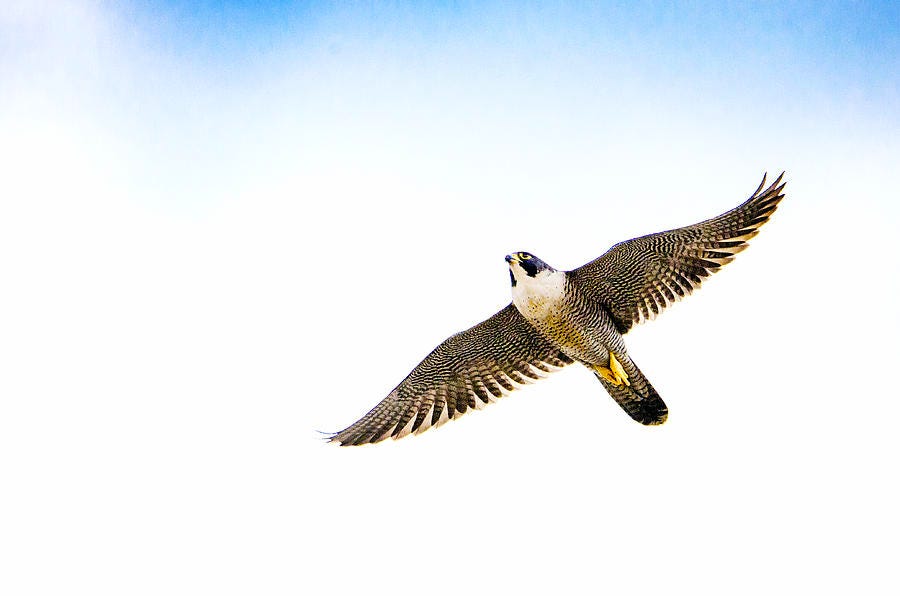
To this day I’m still envious of birds. Take that peregrine falcon, for example—the one swooping around above the eskers downstream of me right now. It seems so free. So happy in its high-altitude playfulness.
So forever alive.
***
I’d planned a five day paddle with the outfitter, knowing of course I wouldn’t finish it with a beating heart. And in case I forget what I came way up here to do, I even wrote a note with step by step detailed instructions and stuffed it into my shirt pocket.
I take it out and read it while munching on a handful of trail mix:
My Dearest Ben,
In case you’ve forgotten where you are and what you’ve decided to do, read this. If you start getting queasy or having second thoughts, don’t forget how many millions of frogs you’ve dissected in your life:
You are on the Thelon River in extreme northern Canada. Smack dab in the middle of the Central Barrens, a huge area of the Arctic hundreds of miles inland from the nearest coast. You wanted to get as deep into the natural world as possible—all space, no clutter/no humans. (Some would say it’s a lot of trouble and expense just to off yourself in such an elaborately unusual way, but they don’t know you like I do). At long last, it’s just you and the musk oxen, wolverine, grizzly, caribou, merlins, and moose. Maybe enjoy that for a day or so.
But when you feel ready, before pushing off from shore, check that Grandpa Vernon’s knife is still in your jeans pocket. Drift awhile, take in the sky and whatever’s in it and under it, lie back and get comfortable, then take out the knife. It’s sharp enough. You made sure.
Make one incision across each wrist, then close your eyes and take in a deep, cleansing breath.
A week from now, an automated email will go to your wife (name = Gina) with your personal passwords and updated end-of-life directives (i.e., NO Facebook vigil/death announcement, for the love of God). She already knows your will is in the lockbox. In the last paragraph, you told her you wouldn’t be coming back and apologized for all your failures of kindness and selfish moments and told her how much you loved her. You also included a concert performance video of yours and Gina’s wedding song, Everywhere by Fleetwood Mac.
You’re going to be okay. So will everyone else you left behind. It may take awhile, but they’ll be okay. As a reminder, you have no children, unless you want to count your students, Buddy, your rescue redbone coon dog, your baseball card collection, your vintage microscopes and your signed, first-edition copy of Aldo Leopold’s Sand County Almanac.
In case you’ve forgotten, you wrote these instructions yourself.
You’re a good man, you’ve had a good life but you’re doing the right thing for everyone concerned.
I love you, Ben.
Sincerely,
Ben
***
Naturally, I packed light. To keep up appearances with Gina, I did take a handheld satellite communicator, plenty of freeze-dried food, warm clothes, even my old Nikon film camera to capture “the experience.”
It was hard trying to maintain the status quo around her, especially in that she was transmitting an unusual amount of anxiety this time. Rightly so, I suppose. I’d taken many canoe trips on rivers all over America, solo or with my old, childhood friend Alan, but this would be the most extreme journey yet (an understatement). I tried my best to reassure Gina with a straight, business-as-usual face. Naturally, that moment when she said, Come back to me and I said I will—knowing I’d planned not to—was the trickiest. Her laser-like eyes burned a hole right through my forehead, so I fear she saw it all. Even though I’m sure my plan was partially disguised by the growing amount of plaque strangling my neurons.
Drifting now. Paddle across knees, water trickling off the end of it, dripping slower and slower like a clock winding down towards its final tick.
Looking down into the water: flashing streaks. A school of arctic graylings, their sailfish-like dorsal fins quivering pennants in the current.
Beholding the imperfect beauty of my creation stretched out in front of me. The birch bark hull itself, stitched together with sinewy spruce roots, sheathed and ribbed with Western red cedar, saturated with spruce pitch for waterproofing. But, like me, it will eventually rot into organic decay. I’ll miss it, but it will have served its purpose.
Gazing up. I knew the sky would be big, but the blue dome over me seems endlessly accommodating. I squint at the sun which will not fall below the treeless horizon for a few more weeks. No darkness here, even at night.
After a few minutes, a lumbering speck on the far horizon catches my eye. High on one of the eskers (a large sand hill). Soon, floating just below the rim, I recognize the beast, one I’ve always wanted to see. Gigantic! At least eight feet to the shoulders. Fine hairs tracing its prehistoric-looking silhouette billowing cinematically in the breeze. Right out of PBS Nature documentary.
I just can’t remember the goddamn creature’s name.
To be surrounded by such life! My God. If I could look at my cells under an electron microscope right now they’d be giddy. Probably high-fiving each other. Unconsciously I take out my camera and snap a picture of the beast, intending to share it with the kids at school. And then I feel the outline of the note in my pocket, which reminds me that I won’t be going back to school.
Jesus. It’s a musk ox! A big-ass, beautiful musk ox.
***
By late afternoon I’m beaching the canoe on a flat, undisturbed expanse of sand about the size of a backyard suburban patio. It’s walled in by gently sloping escarpments, so should offer good protection from the wind. Plenty of space to pitch the tent. After hauling out my gear and setting up camp, I climb a narrow gap in the escarpments and pause at the top of the esker. Ten minutes later, I’m still standing in the same spot, paralyzed by the endlessly beguiling landscape. Tundra blanketing out like a rumpled, unmade bed of red rocks, lime-green lichens and a rainbow of wildflowers sprouting from islands of glistening snow—as far as my eye can see.
Eventually my gaze drops to the ground in front of me and I suddenly notice an unnatural feature that doesn’t seem to fit with all the other elements of the geography: a human footprint (not mine) carved into the thin layer of soil that tops the permafrost. The impression has sharp edges unmolested by wind, rain or the passage of time. I must’ve been too distracted by the scenery to notice them, but surely whoever left the prints is far downstream by now. Still, it’s a little disheartening. And maybe at a deeper level, unnerving, since I’d rather not have any witnesses around. Human, anyway.
When I get back down to the campsite, I balk at all the strange objects at rest on the beach. For a maddening moment, nothing registers in my mind. Everything looks unfamiliar. I ask myself: What is all this? A good thirty seconds must’ve elapsed before I can label everything with a word: canoe, tent, paddle, backpack, etc. It’s enough to make me decide that tomorrow morning might be the best time to launch myself into the infinite great emptiness beyond the (tangible) infinite great emptiness all around me.
Two hours later, night falls. Naturally, the Midnight Sun doesn’t. All around, just shadows cast by the low-hanging orb softly glowing above the horizon.
After setting up the tent and getting somewhat organized, I make dinner. Not the classic steak-and-potatoes last meal a death row inmate might request, but a freeze-dried version of beef stroganoff. Just add hot water. Which I do, while snacking on the hand-held salad of carrots and celery and staring at Venus as it becomes apparent in the east. I’ve never seen it this bright and beautiful. Almost faceted, like an interplanetary diamond shimmering under the glow of a museum spot light.
Later, although I know sleep probably won’t come, I decide to get comfortable in the sleeping bag and try to hop-scotch from one happy memory to another. But surprisingly, just as Gina’s wedding day face flashes in my mind and that lilting sound of Everywhere dances across my brain from one ear to another, I get sleepy and nod off—even as the sun’s steady dim glow turns my tent into a rather distracting tangerine-colored mushroom.
When I finally come to, it’s bitterly cold outside my sleeping bag. The propane canister attached to the heater—empty. It’s 5:45 a.m. Doing the math, I estimate I’ve been out for at least seven hours without budging. I get dressed, go outside and stoop by the edge of the river. Even without my Polarized glasses, I can see a regatta of arctic grayling cruise by under the surface of the water. On the pebbly bottom, spoonhead sculpins are vacuuming up a buffet of plankton and larvae. And when my eyes return to the glassy surface of the river, a reflection catches my eye—the falcon again. I look up, see it rocketing skyward on an updraft, almost like it’s determined to escape the earth’s atmosphere and never come back. As I’m watching the peregrine vanish into the rising sun (with envy, of course), something jogs me out of the trance. A faint sound over my shoulder. A clicking, which quickly multiplies into multiple clickings. When I turn to look, rocks are spilling/clicking down one of the escarpments. And then I see the source of the disturbance standing atop the esker fifteen feet above the campsite: A man—aiming a cocked crossbow at me.
“I need the canoe,” he says.
Frozen in such an unexpectedly surreal moment, my mind goes blanker than usual. I can’t form any sort of response with my mouth and tongue, other than a pitiful, involuntary expulsion of air that starts at the gut level and escapes across my vocal chords.
“Oh.”
Average height and build—same as me. But dressed in filthy clothes that look like they’ve been run through a wood chipper. The shaggy, unkempt stranger starts side-stepping closer to the trail that leads down to the campsite. Seconds later, he’s on the other side of the tent, the quivering arrow tip ten feet away from the tip of my nose.
At which point I begin to feel sudden changes in my body, the pressure of heat welling up in my chest and electrical chaos swirling in my failing gray matter. Miraculously, I manage an intelligibly honest reply.
“Well, I need it myself.” I don’t dare look away from the man, but I sense that not two feet from my the back of my hand—and resting against the forward deck of the canoe—is the grip of the paddle. The one I carved myself out a solid piece of ash. And rock-hard—as hard or harder than the Louisville Slugger bat I used to swing with some success on a small-college baseball diamond.
“Shut up. Get on your knees.”
Following instructions, I feel my jeans pocket stretching over the bulge of my knife—and start shaking my head, thinking: isn’t dying dying? Shouldn’t I just make a move for the paddle and let him launch that razor-tipped broadhead into my jugular? It still involves an incision with a sharp edge, so still in the conceptual ballpark. Still accomplishes the goal. Wouldn’t that be the easier way out? Less self-centered? More heroic?
But.
What about the thoughtless theft of my lovingly crafted personal property—the vital lynchpin of a well-thought-out exit strategy? Seems an unjust interruption by fate, is all I can think.
Facing me, the man now has one foot on the bottom of the canoe and one still on the beach. Just as he begins to reach for the paddle himself, something startles us both: an explosive crash on the river, followed by a hollow kerplunking sound—not twenty feet away from the canoe. Soon, the blue-gray raptor roars up out of the water like an angry Poseidon, thrashing around and finally taking flight with a baby grebe clutched in the trident of its talons.
Luckily, the unexpected predator/prey event holds the man’s attention one nanosecond longer than my own.
I see his eyes returning to mine in a blur, just before I see the edge of the paddle’s blade crash into the man’s left ear with a satisfying thud, as if I’d just buried the edge of an ax into a burlap sack of corn.
It felt good.
So good, in fact, that I kept on swinging, even as the flying arrow almost parts my hair. Scrambling and wild-eyed, the man is on his back and bloody, back pedaling on his ass. But I chase him down, keep swinging—thud after thud.
Dispatching fate.
I’m so preoccupied I don’t hear the float plane land, the engine shut down or even the pilot splashing through the water towards us or yelling enough…enough…enough!
As I crumble back down to my knees, all I can do is laugh hysterically. When what I should really be doing is trying to explain? Maybe? But the words He tried to steal my canoe are gummed up in the prefrontal cortex. And not just that. I suddenly can’t remember who I am or where I am or why my eyes are swimming a watery fluid I can’t label with a word. But somehow, two nuggets of knowledge suddenly come unstuck from my slowly dying cerebral sludge and soar out of my mouth.
“The peregrine falcon is the world’s fastest diving bird, having once been clocked diving at a speed of 186 miles per hour. And your name is Jim.”
He’s bent over, gasping for air, clutching the paddle, eyeing the motionless, bloodied intruder with a confusing expression—equal parts suspicion and relief. Then he looks at me with more of the latter, puts his hand on my shoulder, and says, “Congratulations.”
***
It all happened so fast.
The pilot got on his radio and twenty minutes later a jet helicopter with a Canadian Wildlife Service logo emblazoned on the door landed on the esker. Two officers tumbled out, cuffed the barely-conscious stranger, loaded him up and the copter flew back to wherever they take people like him. Apparently, he was a notorious poacher who’d given them the slip all summer long. One of the officers said he probably needed my canoe to haul a fresh load of contraband (bear paws, gall bladders, etc.) to some secret downstream cache.
For a long moment, the pilot surveyed me with his kind, searching eyes and then offered to fly me back to Yellowknife, but I politely declined. Just smiled while zipping up my PFD and settling into the canoe—told him I’d be fine. That it had been a lot of trouble just to get here, so I might as well finish what I started. Right! he said (encouragingly), you’re going to love where you’re going. I said, I’m sure I will.
His name was Jack, by the way.
#
Of course he had to protect that canoe!~ Really liked this story~
Wow! What a twist. I hope you/he has more adventures to share.