
Happy-ness.
How one father made the most of an abbreviated life.

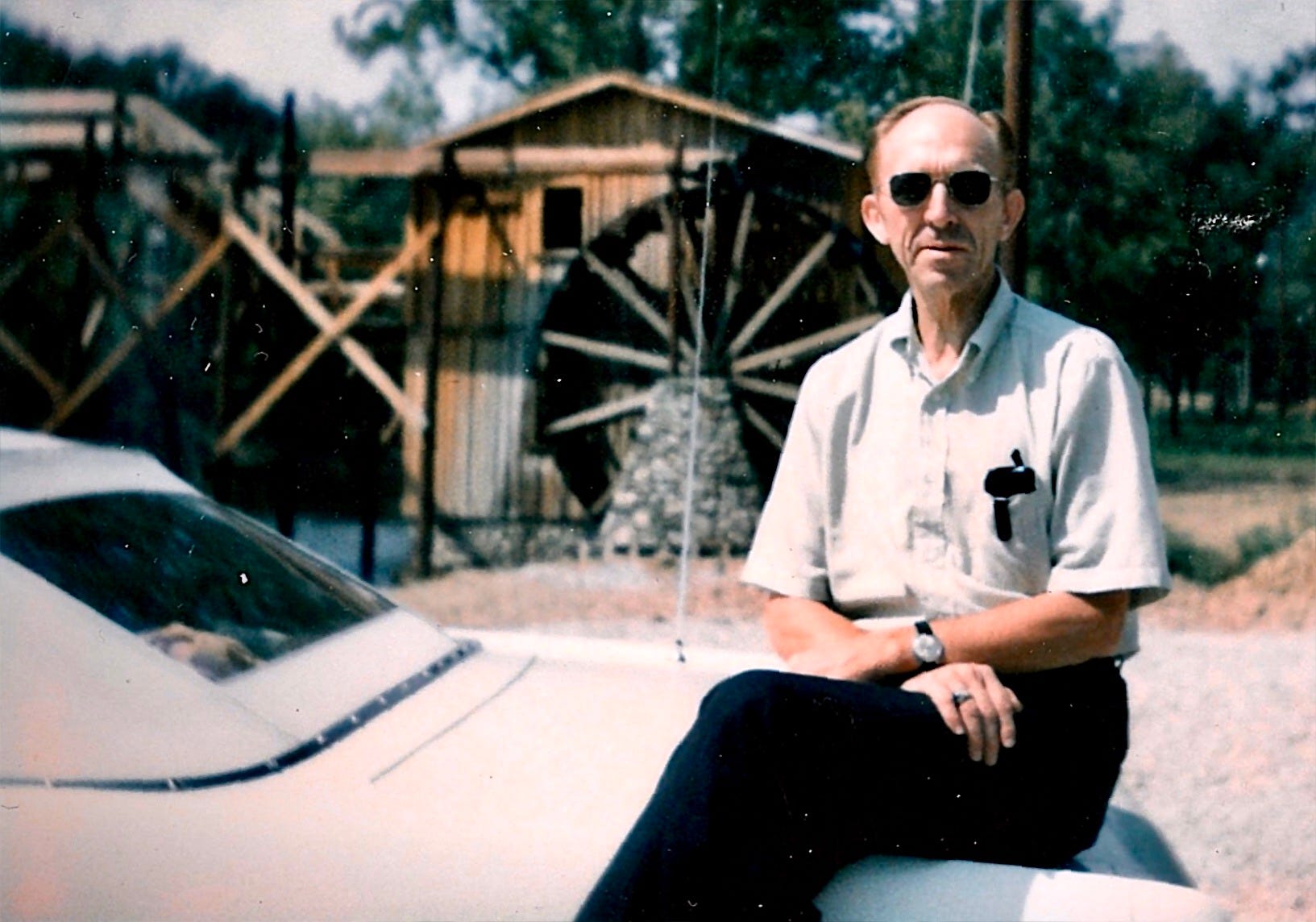
Greetings, Friends!
I’m pretty sure I inherited the travel and exploration itch from the best Sunday afternoon mule rider/racer in Pulaski, Tennessee.
Nomadkins, Sr., you might call him. But most folks knew him as “Happy” (sometimes abbreviated to “Hap”).
My tall, lanky, fun-loving father had a weakness for sporty cars, road maps and unexplored country lanes. In his early days before he got sick, he really got around. From Oregon to Miami to Liverpool and many points in between.
The last document he wrote before he died was a list of cars he’d owned in his life, including a 1952 Jaguar Mark IV “mid-size luxury sports saloon” with red leather seats and solid pecan steering wheel. That list still resides in his bible. I think of it as sort of a fifth gospel—the Gospel of Happy—proving that he worshipped his own wheels as much as he did the Wheels of Ezekiel.
Traveling made him even happier.
Roy Brown Adkins, a depression-era farm boy with a four-barrel carburetor soul, could drive from sunup to sundown and not break a sweat.
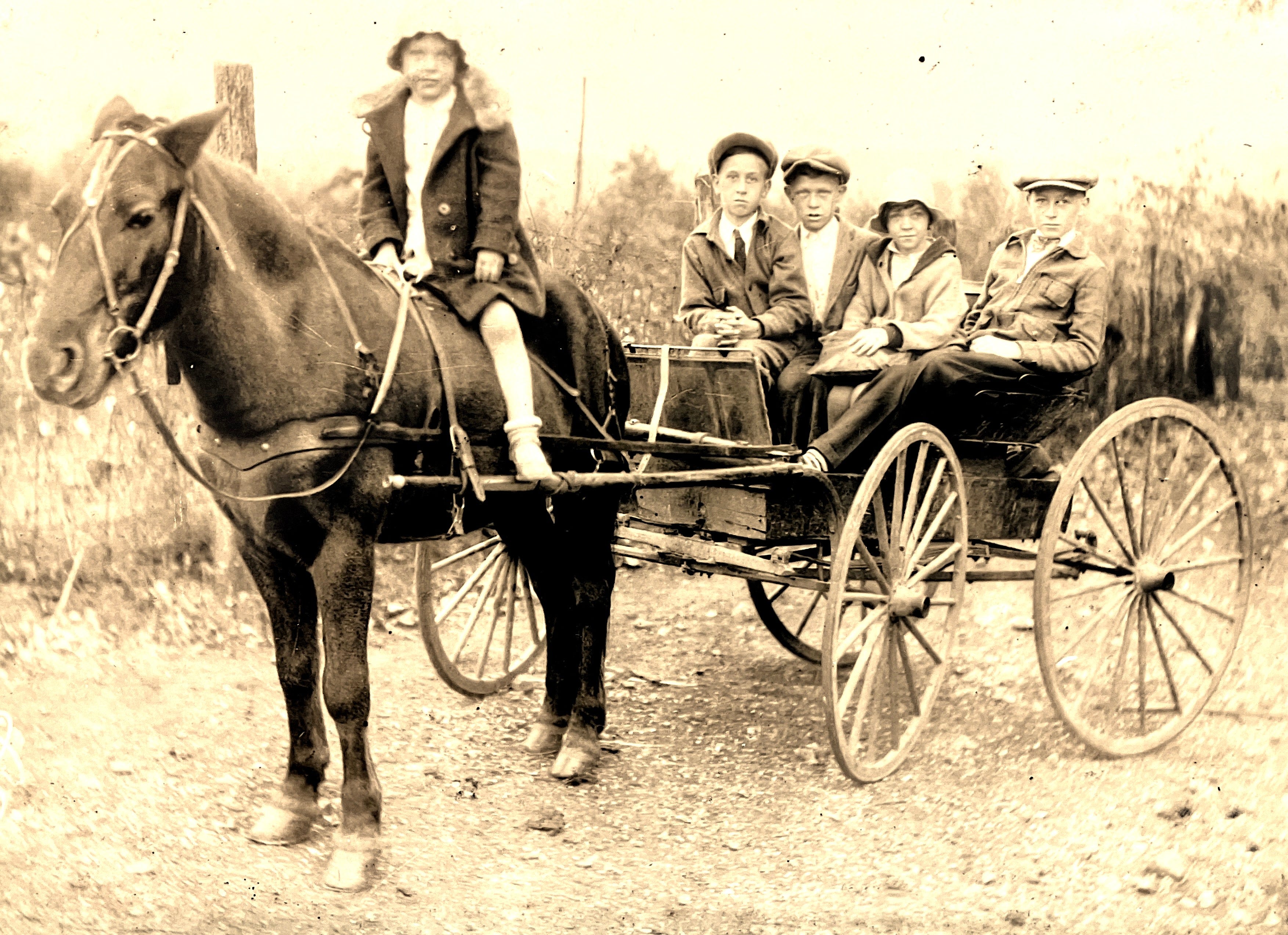
But long before he developed a love for endless ribbons of asphalt (with the breeze blowing in what was left of his fire-red hair), my father navigated Alabama dirt roads on horse-drawn buggies with his brothers and sisters. Not because of a desire to do so, but out of necessity. To help deliver fresh milk from the family’s dairy farm to the neighbors, haul storm-fractured hickory logs to the sawmill, go to church or visit nearby relatives.
After reaching high school age in 1937 (and not finishing with a degree), he joined the Civilian Conservation Corps and ended up at Camp Nehalem on the northern Oregon Coast. He planted trees, cleaned latrines and hauled in a whopping salary of $35 a month. He kept $5 and sent $30 home to my grandparents to help the family make ends meet. But rarely did the ends meet during those bleak times.
Staying Happy in the midst of war.
Like so many proud but humble World War II veterans, he rarely talked about his war-time experiences. But he did leave behind a brief written remembrance which identifies some of the geography he trod (mostly marching in muddy army boots):
“World War II had begun, and I was 1A, so my next job and move was to the army at Fort Oglethorpe, Georgia, and then to Camp Crowder, Missouri. After basic training and several military schools, I was put in a training outfit as an instructor. We would take men out in the field on maneuvers and after a few weeks of training, they would be sent overseas. Finally, about the last year of the war, I was sent over to England, France, and Germany. I will never forget V.E. Day and all the cheering, happiness, and celebrating among the troops. We knew it meant going home in a few weeks. I was very thankful that it was all over and I was still in one piece.”
Happy brought home a footlocker full of wartime mementos, including a gigantic Nazi flag. My grandmother cut out the swastika and made a quilt from the blood-red remains. It’s worth noting: my dear, sweet Gamma was not a Third Reich sympathizer, just a queen of resourcefulness since good wool bunting fabric was hard to come by in those days.
Cut loose from active duty, my father the free bird wasted no time in flying here, there and everywhere.
The chronology is a bit sketchy during this time (and maybe he wanted it to stay that way). But we do know he attended auctioneer’s school in Decatur, Illinois and also trained thoroughbred race horses in Hialeah, Florida, where he possibly rubbed shoulders with those who contributed to Miami vice—bookies, the occasional wayward “dame” and other assorted track lizards. My old man did know a helluva lot about the game of snooker and seemed to love the smell of a fresh deck of Bicycle playing cards (almost as much as the aroma of a freshly opened can of King Oscar sardines).
Eventually, though, after sewing his wild oats, my father re-enlisted in the Air Force and settled into a respectful military career that took him back to Europe.
At one point, while on leave from his post in London, Happy visited his baby sisters in Memphis, Tennessee—one of whom just so happened to have had a strikingly attractive friend named Mary Sue Brown.
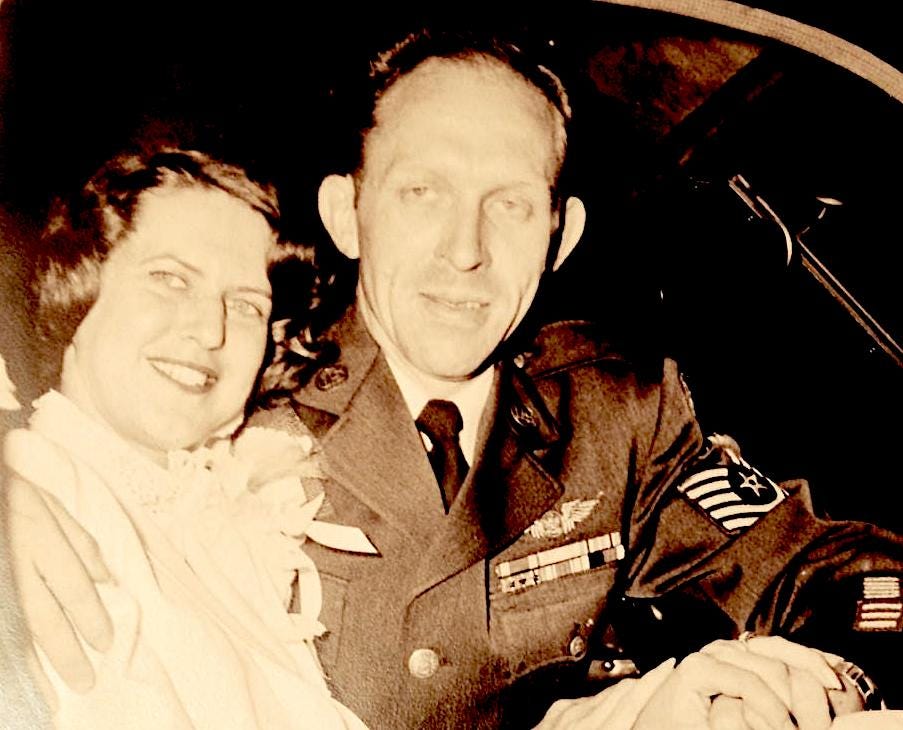
Suffice it to say the perky, effervescent cotton brokerage secretary got Happy’s motor running the way no Detroit-built dream machine ever could.
So much so that, following a hyper-short engagement, wedding bells rang at Idlewild Presbyterian Church on May 21st, 1950, in Memphis, Tennessee. Soon the two love birds were rumbling south towards a honeymoon in Tampa. And the rest is immediate family history, including the births of my brother (James Postal b. 1951) and yours truly (b. 1956).
A surprising new destination: knowledge.
Ironically, Happy was a “poor student” growing up. Unfocused, with sort of a lazy, mischievous streak (i.e., a notorious watermelon thief). So it was a minor miracle he ended up standing at a high school biology lab podium lecturing football linebackers about the tapeworm cycle.
Somehow, over time, he developed a deep love for learning and teaching. Maybe he felt self-conscious or guilty about his slightly aimless early days. Family peer pressure could’ve also been at play. Gamma had been a school teacher for many years and four of Happy’s sisters ended up in the vocation, as well.
After retiring from the military, my father earned his GED diploma, Bachelors’s degree, and Master’s degree in one fell swoop—bang, bang, bang. Then he bought that green checked sport coat, a brand new Scheaffer fountain pen, some size 12 Hushpuppy shoes—a new uniform, so to speak—and launched an encore career that would last eighteen years.
As a former army drill instructor, he had no trouble projecting a stern and proper “teacher” demeanor while being deadly serious about discipline. He was both beloved and feared by his students. Beloved because he could sometimes fall for a dog-ate-my-homework sob story. Feared because he could sometimes lift an ill-behaved linebacker off the ground with one smack of a paddle (back when such violence was legal and quite effective).
His road ended in the backyard.
I remember my dad enjoying the most mundane things. His bony butt perched in a director’s chair, the orange canvas sun-bleached and tattered. Contemplating a ladybug as it crawled across a dew-drenched tomato leaf. Watching Mom tend and prune her bonsai plants. Or glancing into the Florida sky to track a whistling wood duck streaking across our rooftop from the lake down below.
A trusted friend named Jack Daniels sometimes accompanied Happy during these simple pleasures, but only a couple of straight shots and usually after 5 p.m.
After battling emphysema for many years, my father died in 1977 from heart failure, when I was 20 years old. But I’m glad I had him as long as I did. He taught me a lot. Not so much with his words, but more with his countenance—his good nature, resilience and admiration for the blessings that surrounded him, not the least of which was that perky, effervescent cotton brokerage secretary who cared for her man through thick and thin—until the end.
And even after witnessing the phenomenon up close and so intimately, it would take me decades to appreciate and begin practicing his formula for living a good life: to be Happy, it’s crucial to spend as much of your life as possible traveling the road called Now.
Peace & Love,
Mark
P.S. My grandmother’s real-world resourcefulness with the Nazi flag inspired this piece of short fiction, which I posted on Substack a couple years back: Vera Makes A Change.
What a wonderful memory about Uncle Happy. I have so many special memories of your family.
What a heart warming story about your Dad!